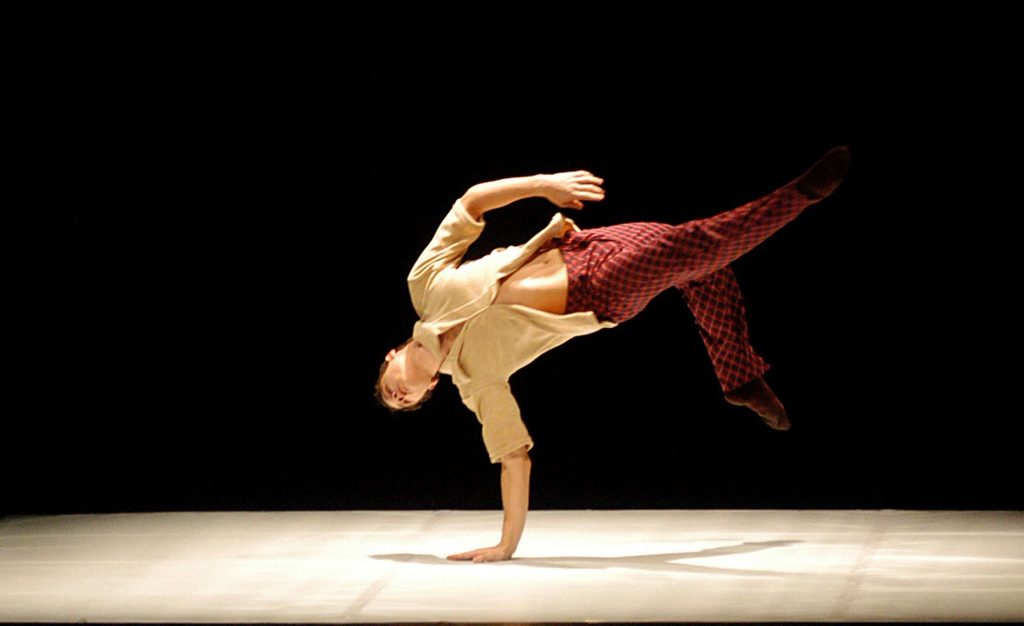
On Oct. 25, Bucknell Assistant Professor of Theatre and Dance Jaruam Xavier will take the
Weis Center stage for Ori: An Exploration of Brazilian Dance and Music. The performance
brings together parts of Xavier’s life in Brazil with the dance traditions, memories and questions
about spirituality that have shaped his work over the years.
We spoke with Xavier about how he first found dance as a child, where Ori began, why the work
has continued to change and what he hopes audiences discover through it.
You started dancing when you were 10 years old. How did dance first become part of your life, and how did that path eventually bring you to Bucknell?
I come from a very artistic family. My father is a musician, one of my aunts is a visual artist and there are dancers and choreographers in my family. But my grandfather was really important to how I started. He loved tap-dance movies, and when I was 10, I wanted to be like him. So I started with tap dancing. By the time I was a teenager, I knew I wanted to become a professional dancer. I received my first professional contract at 18 and went on to dance with three companies in Brazil. I stayed with one of those companies for about 10 years. I also had opportunities to work internationally, including in Belgium. Later in my career, I started looking for more space to teach and to explore dance in another way. I went to graduate school at the University of Iowa. I graduated in 2024, and that same year I came to Bucknell.
Where did the idea for Ori begin?
It has had a long trajectory. Ori started when I was in graduate school as part of a composition course. At the time, I was thinking about Candomblé, an Afro-Brazilian religious tradition that resonated with my own experiences, and how I could bring some of those memories into conversation with contemporary dance. The first version was a solo of about seven minutes. I performed it in different places, including Chicago, New York, St. Louis and Trinidad and Tobago. Every time I danced it, I would revisit those memories and discover something new. The work kept giving me more information. It never felt like something I had finished once and then left behind.
The original Ori was a short solo, but you later expanded it through collaboration. How did that change the work?
The first version was only around seven minutes, and eventually I wanted to go deeper into some of the Brazilian ideas within it. I began developing it with another Brazilian choreographer and performer whom I had worked with in Brazil. There was already a shared history between us, which became important to the process. Our lives had also taken us in different directions after Brazil. We had both moved abroad and had experiences of building our lives somewhere else, so there were similarities in what we were carrying into the work. The collaboration allowed the original solo to become something much larger. It was no longer only about returning to the seven-minute piece. It became a way of going deeper into some of the ideas and experiences that had been there from the beginning.
Spirituality and ritual are important to Ori. What interests you about the relationship between spirituality and movement?
I have always been very intrigued by rituals because movements within a ritual carry meaning. A step is not necessarily just a step. Within that environment, people understand that a movement can embody something. That made me interested in what happens when you remove the movement from that atmosphere. If I take something influenced by a Candomblé ritual and place it in a completely different setting, like a stage, can it still carry some of that meaning? Can it still evoke a spiritual connection even if the audience does not come from that religious background? I am not trying to recreate a ritual onstage. That is not what Ori is. I am interested in what remains when the setting changes. It is also difficult to say that every movement carries one specific meaning because people perceive things through different lenses. Some parts may be more recognizable and other parts may become much more abstract. I bring an intention to the movement, but the audience also brings its own experience to what it sees.
You bring together forms including samba, capoeira and contemporary dance. How do you approach combining them?
That is something I work with as a choreographer and researcher. I am interested in combining different techniques and seeing whether something else can emerge from them. But it cannot work like mathematics. It is not a recipe. I cannot say I am going to use a certain percentage of samba and then a certain percentage of another form. After years of dancing, these things become part of your muscle memory. So I am not necessarily looking for samba itself or classical dance itself. I am interested in where they converge and what happens when the body carries all of those forms at the same time. Finding that balance can be tricky. Sometimes I have to actually dance the work before I know whether something is working. I can think about it mentally and analyze it, but the experience gives me different information. Once I have that experience, I can look at the work again and make changes. Maybe something needs to become more Brazilian. Maybe one element needs more space. Performing becomes part of the way I research the work.
How does Brazilian culture and history enter into Ori?
One thing I want people to understand is how important plurality is in Brazil. We are not only one thing. Brazil is very mixed, and the forms within the performance come from different histories and influences. That is part of why bringing different movement traditions together makes sense to me. They are already part of the culture and they are already part of what I carry in my body. There is also an element of resistance in some of these traditions. I don’t consider Ori to be a political work, but you cannot completely separate some of these forms from their history. Capoeira is one example. It exists because of resistance. Sometimes history is more complex than what we see on the surface. There are forms we are able to practice today because people before us fought to preserve them. That history is present for me even if I am not explaining it directly to the audience.
You teach Brazilian Fusion Dance at Bucknell. How does your work in the classroom connect with what you are creating onstage?
There is a direct connection between the course I teach and my research. Some of the forms I work with in class are also part of what I am exploring as a choreographer. I don’t really think of dance only as a product. Of course, what people eventually see onstage is a product of some sort, but inside that performance is all of the other work I am doing. There is the professor, the choreographer, the improviser and the performer. Those things are difficult for me to separate completely. Teaching can affect the way I think about choreography, and my research can affect what happens in the classroom. I am always trying to find a balance between those roles. My relationship with performing itself has also changed. There was a period when I was doing somewhere between 60 and 100 performances a year. I enjoyed that part of my life, but I don’t feel the same necessity to be onstage anymore. I feel like that chapter is mostly done. I am more focused now on choreography and teaching. There is still some nostalgia, of course, but I don’t miss performing in the same way because there are other experiences now that give me something similar. Seeing a student accomplish something can give me almost the same feeling.
What do you hope audiences take away from Ori, particularly if they are encountering these Brazilian traditions for the first time?
I hope they understand a little more about how plurality plays a role in Brazil. They can experience that through the dance, but also through the music. I also hope they can grasp something of the spiritual connection to the work. I use spirituality in a very broad way. You don’t need to come from the same religious background or know about Candomblé before coming to the performance.
At the same time, I don’t want to determine exactly how people should engage with the work. You can be passive. You can simply watch it and experience it. Or you can start asking questions. I actually like when people question the work because questions create some form of exchange. If you ask yourself why you responded to one part in a certain way, that can lead to another question. Then maybe you find a new answer, and that answer creates another question. I don’t want it to be binary, where the audience either understands the work or doesn’t understand it. Art can create problems. It can make you think about something differently. If people leave with a little more understanding of Brazil, some sense of the spiritual connection in the work or even just a new question, that is meaningful to me.
Ori: An Exploration of Brazilian Dance and Music will be presented Sunday, Oct. 25 at 2 p.m. in the Weis Center Concert Hall. The performance is free and tickets are not required.